


Published by Marsilio Arte, "Il seme santo. La poetica di Anselm Kiefer" contains a series of reflections by psychoanalyst Massimo Recalcati on the German artist’s research and work, which is at the centre of the exhibition dedicated to women alchemists that is being displayed in the Sala delle Cariatidi at the Palazzo Reale in Milan from 7 February 2026.
It is a well-known fact that alchemy is a fundamental reference point in Kiefer’s understanding of the process of artistic creation. It is no coincidence then, that Massimo Cacciari once defined his work as an «alchemical poiesis», capable of […] making a ruin sacred, the stump a «holy seed», the end a new beginning. Kiefer touched on this in particular in his lectures at the Collège de France. What interests him most is the analogy between alchemy as a process of transformation and artistic creation. How can a poor, humble, dark metal be refined to the point of becoming silver and gold?
Canonically, the alchemical process follows a movement that begins with lead, passes through silver, and reaches the precious lustre of gold. This process can be read in a teleological sense, that is, as a movement that gradually ascends from the lowest planes to the highest, or, as I believe Kiefer’s metaphysics of what’s left pushes us to do, like a redemption of waste, like taking the lowest point as the highest point. This is also the message of the prophet Isaiah: it is the stump that remains ‒ an indelible sign of destruction ‒that must become a “holy seed”. The same thing happens in the evangelical miracle of the wedding at Cana, as recounted by the evangelist John: it is not the sublime wine that replaces the putrid water, but the putrid water ‒ the water contained in the wineskins used in the ritual of purifying the hands of the wedding guests ‒ that is already in itself sublime wine.
In this sense, Kiefer too can affirm (referring precisely to the process of alchemical transformation) that the transformation «is already present in the thing». Therefore, no authentic transformation can be considered a mere substitution. The spoilt matter, the debris, the remainder, the lead are not simply replaced by gold because gold is already wholly in the spoilt matter, in the debris, in the remainder, in the lead, and the light of gold is already entirely in the lead because shadow is not the opposite of light, but rather, as Parmiggiani said, it is its very blood.
We should therefore carefully distinguish the dimension of the remainder from the rigidly melancholic dimension of waste or refuse. That is the feeling Peter Handke came away with from his visit to Barjac: the remains were never understood as waste, because «everything that remained was not recycled; it was preserved and set aside as something of value. In the greenhouse, so large and rich, there was not a single rotten vegetable or dried fruit». This means that the remainder cannot be understood as refuse or simple waste. The alchemical process of transformation does not imply a substitution of materials but rather a change of perspective and position. If gold is already present in lead, if light is already present in shadow, the remainder is not mere waste or refuse, but, as Isaiah would say, a «holy seed». Lead is not simply at the beginning of the process, destined to later become gold, but is already gold. This means that matter, even that which seems furthest from the light, contains the spark of the spirit. It’s that moment that Celan, cited by Kiefer, describes: «the stone adapts to blossom».
In short, every time art performs its miracle, it transfigures the scar into poetry, giving a new form to catastrophe. That is what is manifested, for example, through works composed of lead books which, as such, are illegible. You cannot leaf through them, you cannot hold them in your hands, their contents cannot be known. Yet they retain them, preserve them precisely in their inaccessibility. It is the dialectic between being and nothingness, between creation and destruction that […] characterizes Kiefer’s artistic work. For that reason, he can even argue that the greatness of his towers lies in their collapse. It is no coincidence that dissolution is a fundamental moment in the alchemical process, in which, without it, there could be no new form because, precisely, as Kiefer states, «first there is dissolution and then coagulation».
Massimo Recalcati
The text is taken from Il seme santo. La poetica di Anselm Kiefer, Marsilio Arte, Venice 2026
BIO
Massimo Recalcati is among the most renowned psychoanalysts in Italy. His numerous works have been translated into several languages. He taught Psychology of Art at the University of Bergamo from 2004 to 2009 and currently teaches Dynamic Psychology at the University of Verona and Psychoanalysis of Art at IULM in Milan. On art, he has published: Il miracolo della forma. Per un’estetica psicoanalitica (2007), Melanconia e creazione in Vincent Van Gogh (2014), Il mistero delle cose. Nove ritratti di artisti (2016), Alberto Burri. Il Grande Cretto di Gibellina (2018, with photographs by Aurelio Amendola) and, for Marsilio Arte, Il trauma del fuoco. Vita e morte nell’opera di Claudio Parmiggiani (2023), Il seme santo. La poetica di Anselm Kiefer (2026).
INFO
Kiefer. The Women Alchemists
from 7 February to 27 September 2026
Sala delle Cariatidi
PALAZZO REALE
Piazza del Duomo 12, Milan
https://www.palazzorealemilano.it
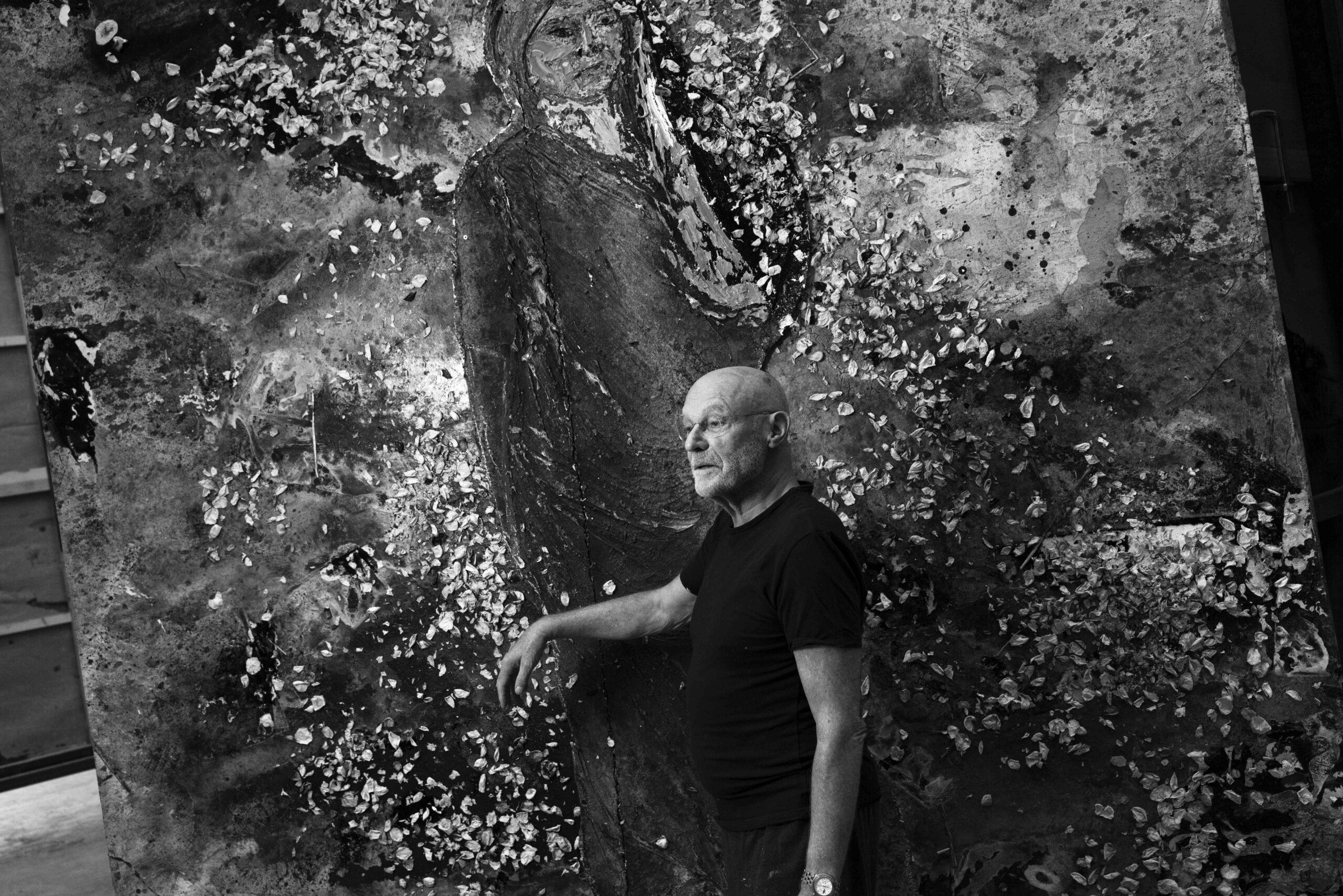
Anselm Kiefer © Paolo Pellegrin
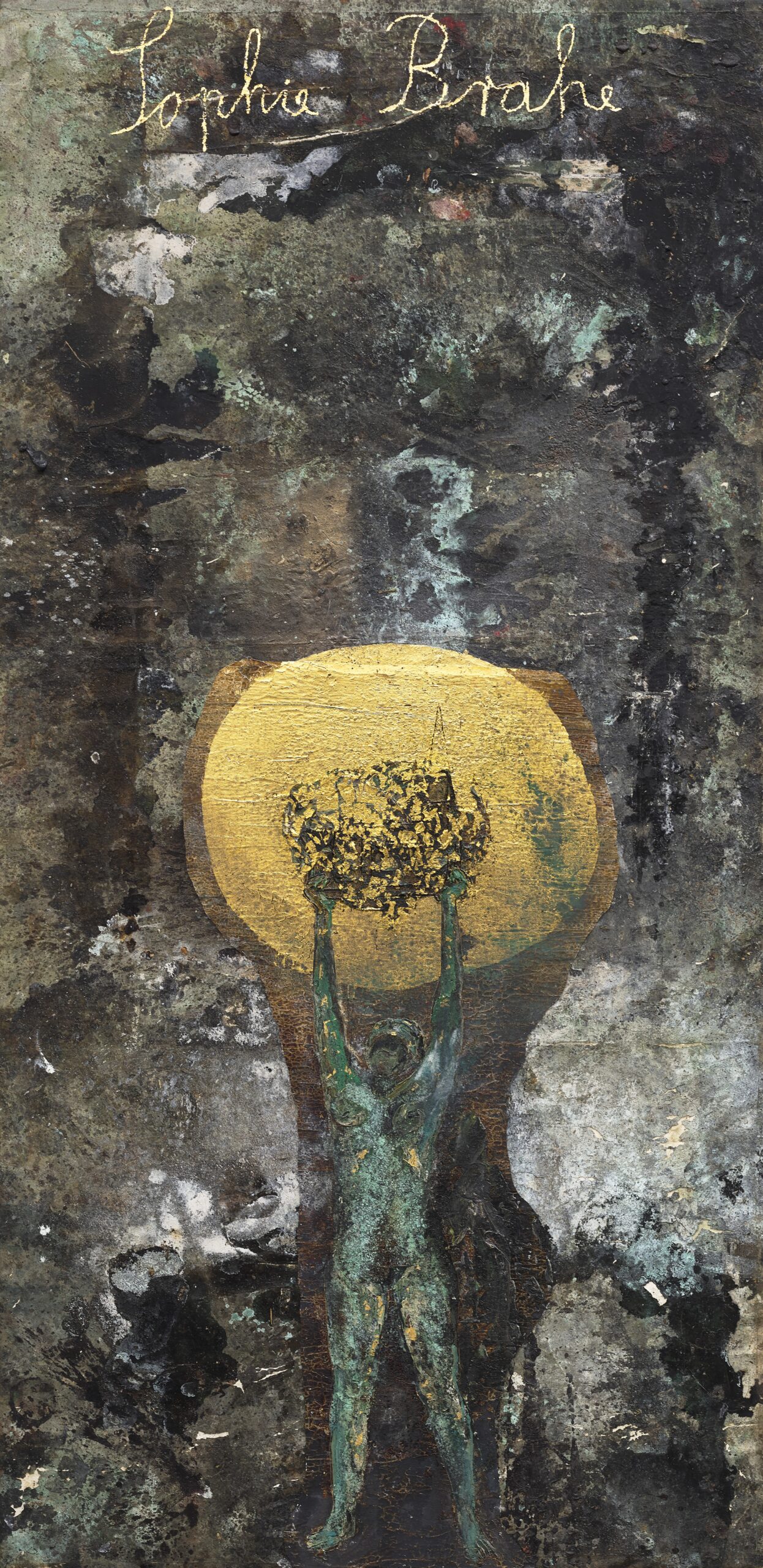
Anselm Kiefer, Sophie Brahe, 2025. Photo: Nina Slavcheva © Anselm Kiefer (cover photo)
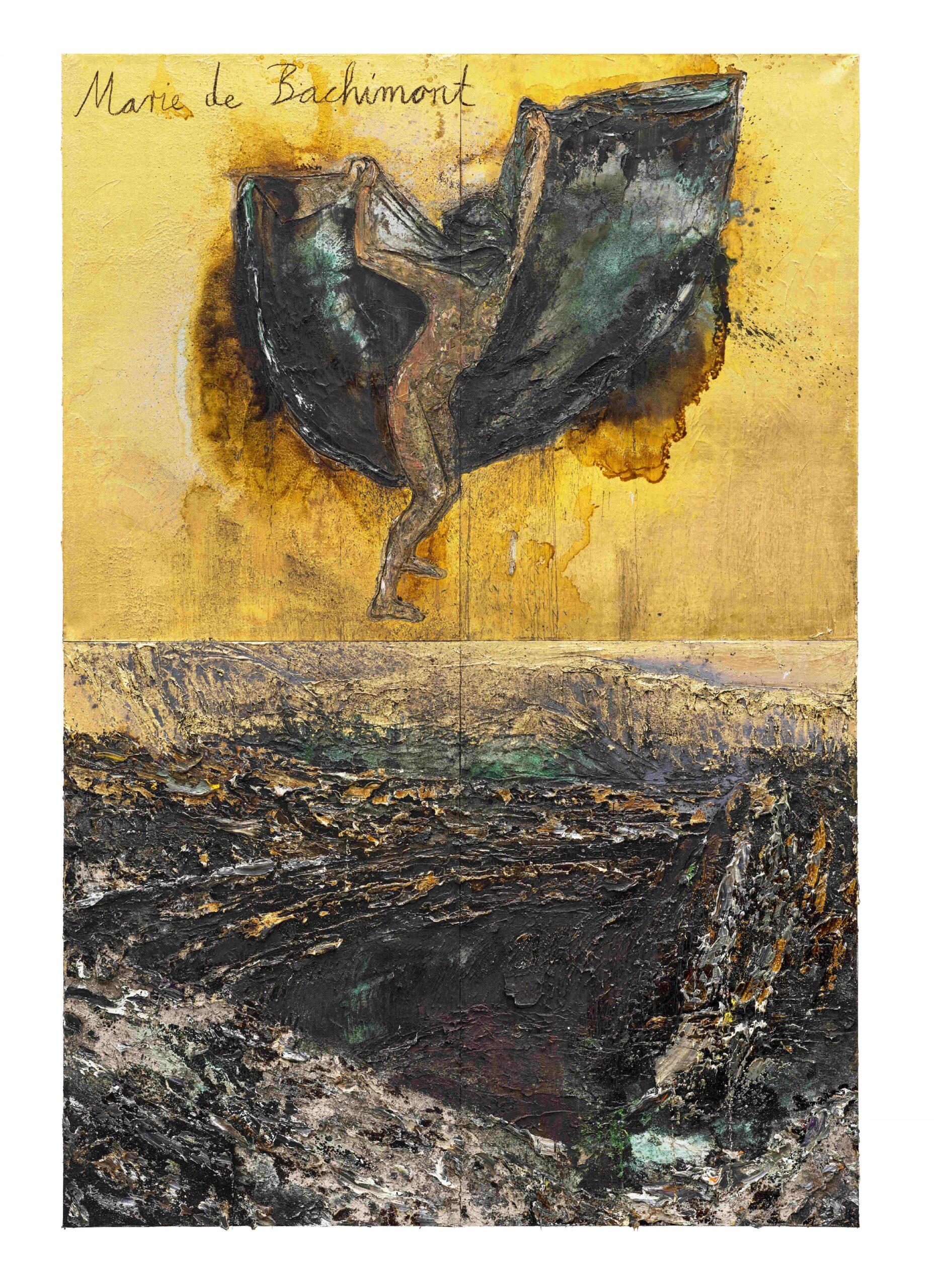
Anselm Kiefer, Marie de Bachimont, 2025. Photo: Nina Slavcheva © Anselm Kiefer
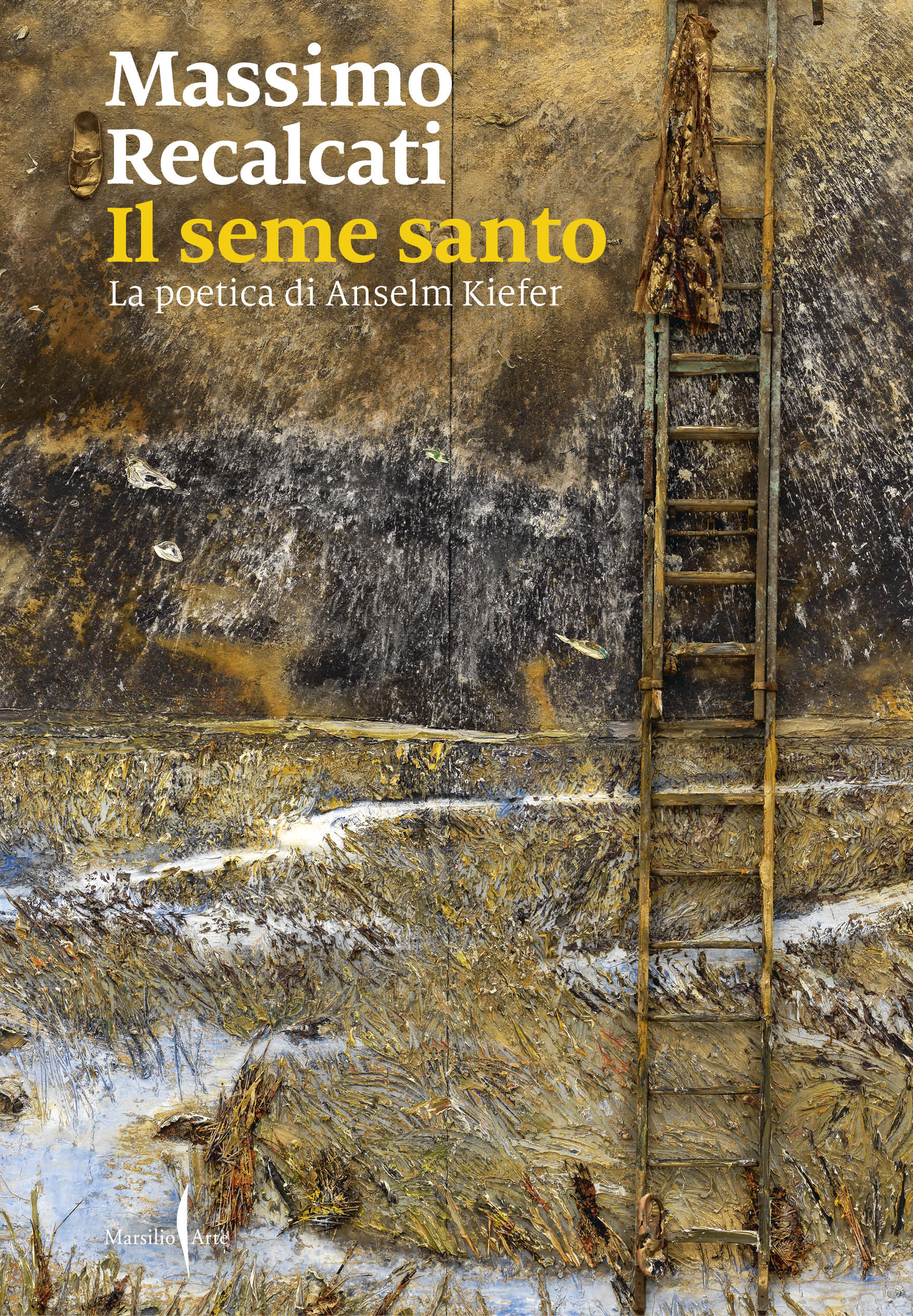
The cover of Massimo Recalcati’s book, Il seme santo. La poetica di Anselm Kiefer, Marsilio Arte, Venice 2026


Image captions:
Anselm Kiefer © Paolo Pellegrin
Anselm Kiefer, Sophie Brahe, 2025. Photo: Nina Slavcheva © Anselm Kiefer (cover photo)
Anselm Kiefer, Marie de Bachimont, 2025. Photo: Nina Slavcheva © Anselm Kiefer
The cover of Massimo Recalcati’s book, Il seme santo. La poetica di Anselm Kiefer, Marsilio Arte, Venice 2026
Related products
Related Articles

