Ispirazione Europa / Italia Germania
Basilica Palladiana, Vicenza 
13 November 2026 - 2 May 2027
The exhibition
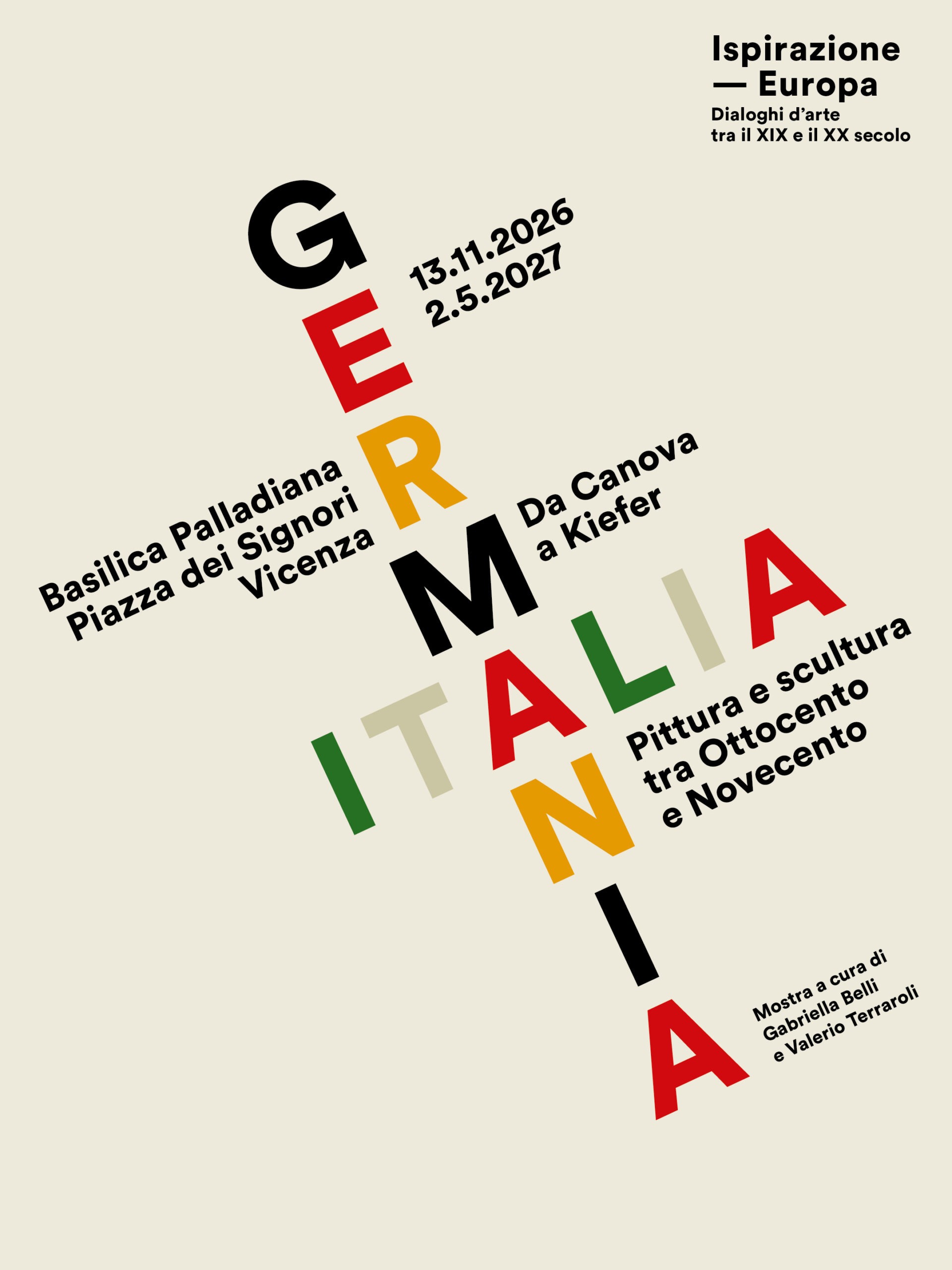
The cycle opens on 13 November 2026 with Italy Germany, the first chapter of a journey that will continue with Italy France in 2027 and Italy Spain in 2028. The exhibition explores two centuries of cultural relations between the two countries, with particular emphasis on the twentieth century, when dialogue between Italian and German artists, intellectuals, architects and designers became one of the driving forces of European modernity.
It reconstructs a dense network of journeys, encounters, influences and exchanges that transformed the language of art and, more broadly, Europe’s cultural outlook. Divided into chapters corresponding to the most significant moments in this process of cross-fertilisation, and set against the artistic, political and social histories of the two countries, the exhibition brings key episodes, figures and events back into focus.
Spanning the nineteenth and twentieth centuries, the exhibition highlights how exchanges between artists, intellectuals and writers generated new ideas and revolutions in artistic language. At the same time, these dialogues reflected the anxieties and hopes of an era marked by profound crises, often anticipating the collapses and subsequent rebirths that shaped European history over those two centuries.
Roots in the Eighteenth and Nineteenth Centuries: The Myth of Italy
The story begins in the late eighteenth century, when Italy became an essential destination for German artists and intellectuals. Johann Wolfgang von Goethe’s journey through Italy between 1786 and 1788 — later to become one of the foundational texts of European culture — helped establish within the German-speaking world the idea of Italy as a place of artistic and spiritual regeneration. It was in this climate that the Nazarenes formed their community in Rome. These German painters chose to live and work together in an attempt to restore a moral and religious dimension to painting, inspired by the purity of Italian Renaissance art. Among the leading figures was Friedrich Overbeck, emblematic of this experience and of one of the earliest moments of modern dialogue between the two cultures. Alongside this development came a confrontation between different interpretations of European Classicism, fuelled by the theories of Johann Joachim Winckelmann and embodied in the work of Antonio Canova, whose works in the exhibition are placed in dialogue with those of the younger Nordic sculptor Bertel Thorvaldsen. By the end of the nineteenth century, exchanges intensified through the Secession movements, particularly the Munich Secession, and through the visionary work of Giorgio de Chirico, placed in dialogue with Franz von Stuck, as well as with the Symbolist culture of Max Klinger and Arnold Böcklin, the latter of whom worked extensively in Italy.
The Avant-Gardes in Dialogue
At the beginning of the twentieth century, the relationship between Italy and Germany entered a decisive new phase. In 1912 and 1913, the Der Sturm gallery in Berlin hosted two historic exhibitions featuring the Italian Futurists. These marked one of the most intense encounters between the European avant-gardes: artists such as Umberto Boccioni, Carlo Carrà and Gino Severini came into contact with German Expressionists associated with Die Brücke and Der Blaue Reiter, including Franz Marc, August Macke, Carlo Mense, Heinrich Campendonk, Emil Nolde and Karl Schmidt-Rottluff. Despite their differences, this encounter helped expand the language of European painting and redefine the possibilities for representing modernity.
Between the Wars: Art and Society
During the 1920s, the relationship between Italy and Germany became increasingly complex, reflecting the political and social tensions of the period. Italian Magic Realism and the German Neue Sachlichkeit reveal striking affinities in their representation of reality: a form of painting suspended between precision and unease, capable of expressing the fragility of both individuals and society in the aftermath of war. Artists such as Felice Casorati, Antonio Donghi, Gino Severini and Cagnaccio di San Pietro enter into an ideal dialogue with German painters such as Otto Dix, George Grosz, Heinrich Maria Davringhausen, Christian Schad, Georg Schrimpf and Alexander Kanoldt, among the interpreters of the anxieties of Weimar Germany. At the same time, another decisive chapter emerged: abstraction. Research developed around the Bauhaus redefined the relationship between art, architecture, design and society. In Italy, particularly in Milan and around the Galleria Il Milione, these ideas found a new generation of artists ready to experiment with radically innovative languages. The work of Wassily Kandinsky, Josef Albers and Willi Baumeister exerted a strong influence on Italian artists including Mauro Reggiani, Mario Radice, Luigi Veronesi, Carlo Rho, Alberto Magnelli, Fausto Melotti and Lucio Fontana.
After 1945: Rebuilding Through Art
In 1958, an exhibition at the Galleria Nazionale d’Arte Moderna in Rome — subsequently presented at the Städtische Museum Morsbroich in Leverkusen — entitled Contemporary German and Italian Painters reopened the dialogue between the two countries after the profound wounds of the war, within a broader climate of reconciliation. Among the artists represented were Alberto Burri, Piero Dorazio, Antonio Sanfilippo, Giuseppe Santomaso, Tancredi Parmeggiani and Toti Scialoja, alongside German artists including Karl Fred Dahmen, Fritz Winter, Hermann Bachmann, Peter Herkenrath, Bernard Schultze and Ernst W. Nay. The post-war period was a crucial moment in redefining cultural relations across Europe. German academies became international meeting places where different generations of artists came together. It was within this context that the ZERO group was founded in Düsseldorf in 1957 by Heinz Mack and Otto Piene, soon joined by Günther Uecker. The group maintained a close dialogue with Italy, where artists associated with the magazine Azimuth — including Enrico Castellani, Piero Manzoni, Agostino Bonalumi and Lucio Fontana — developed research that resonated strongly with the German movement.
Memory, Identity and the Contemporary
One of the most emblematic figures to emerge is Joseph Beuys, artist, theorist and teacher, who developed profound ties with Italy throughout his life. He transformed art into an instrument for political and social reflection, while also contributing to early ecological thinking. In this respect, his work found important parallels with Arte Povera, theorised by Germano Celant, and particularly with artists such as Mario Merz, Giuseppe Penone and Gilberto Zorio. Emilio Vedova, who also taught in Düsseldorf for a brief period and was one of Italy’s most powerful interpreters of the relationship between art and civic engagement, acts as a pivotal figure in this convergence of aesthetic visions and social commitment. His work enters into dialogue with German-speaking artists including the Viennese Actionists Arnulf Rainer and Günter Brus, as well as the younger Hermann Nitsch. From the late 1970s onwards, dialogue between Italy and Germany continued through artists of major international significance. Sigmar Polke, Gerhard Richter, Anselm Kiefer and Georg Baselitz addressed historical memory and Europe’s cultural responsibility in the aftermath of the tragedies of the twentieth century. During the 1980s, questions of memory and identity re-emerged forcefully in the work of the German neo-figurative painters known as the Neuen Wilden, including Markus Lüpertz, Helmut Middendorf and Rainer Fetting, and later in the younger generation of the New Leipzig School, represented by Neo Rauch. These experiences immediately entered into dialogue with developments in Italy, particularly the Transavanguardia, theorised by Achille Bonito Oliva, and artists such as Sandro Chia, Francesco Clemente, Enzo Cucchi, Mimmo Paladino and Nicola De Maria. The exhibition ideally concludes by looking towards the present, through a new generation of Italian and German artists who continue to exchange ideas and collaborate today, keeping the cultural dialogue between Rome and Berlin alive.
The cycle of three major exhibitions is curated by Gabriella Belli and Valerio Terraroli.
Promoted and organised by Comune di Vicenza, Centro Internazionale di Studi di Architettura Andrea Palladio, Fondazione Teatro Comunale Città di Vicenza and Marsilio Arte.
Main Partner: Intesa Sanpaolo
The exhibition Italy Germany is organised in collaboration with Mart – Museo di arte moderna e contemporanea di Trento e Rovereto, Museo Gypsotheca Antonio Canova in Possagno and Casa di Goethe in Rome. It is held under the patronage of the German Embassy as part of the celebrations marking the 75th anniversary of the resumption of diplomatic relations between Italy and Germany.
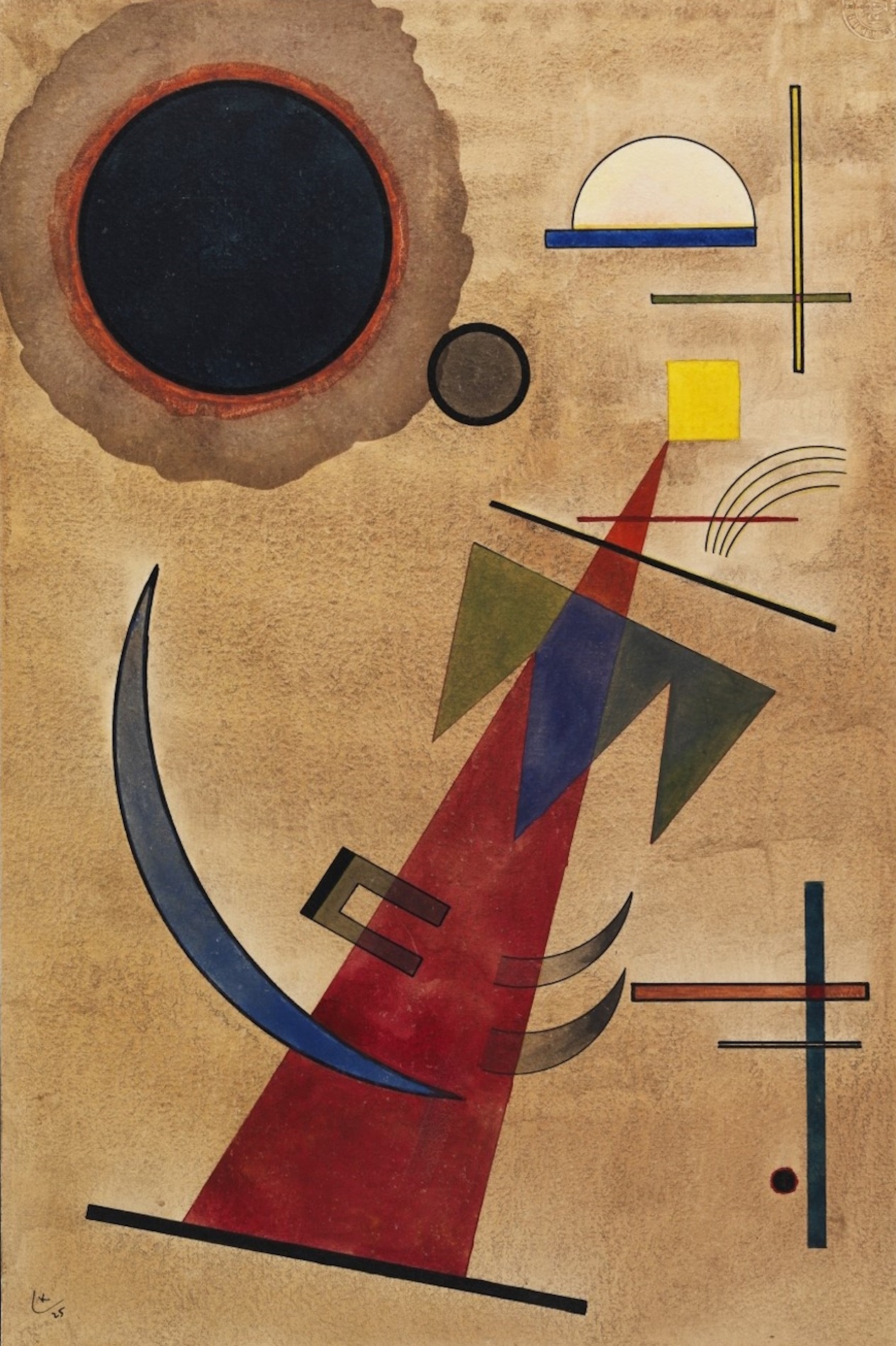
Vasilij Vasil’evič Kandinskij, Rot in Spitzform, 1925. Mart, Museo di arte moderna e contemporanea di Trento e Rovereto
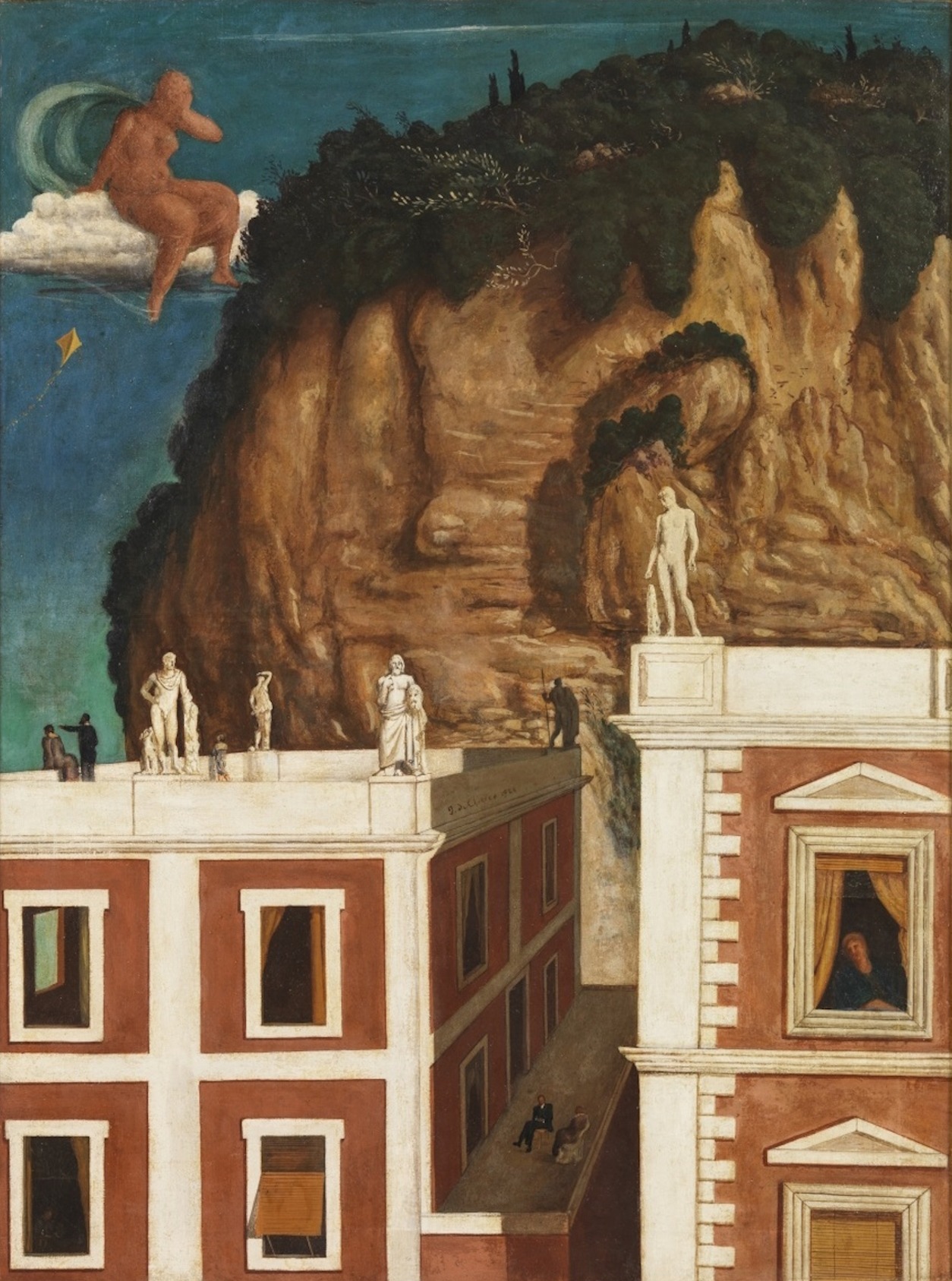
Giorgio de Chirico, Villa romana, 1922. Mart, Museo di arte moderna e contemporanea di Trento e Rovereto
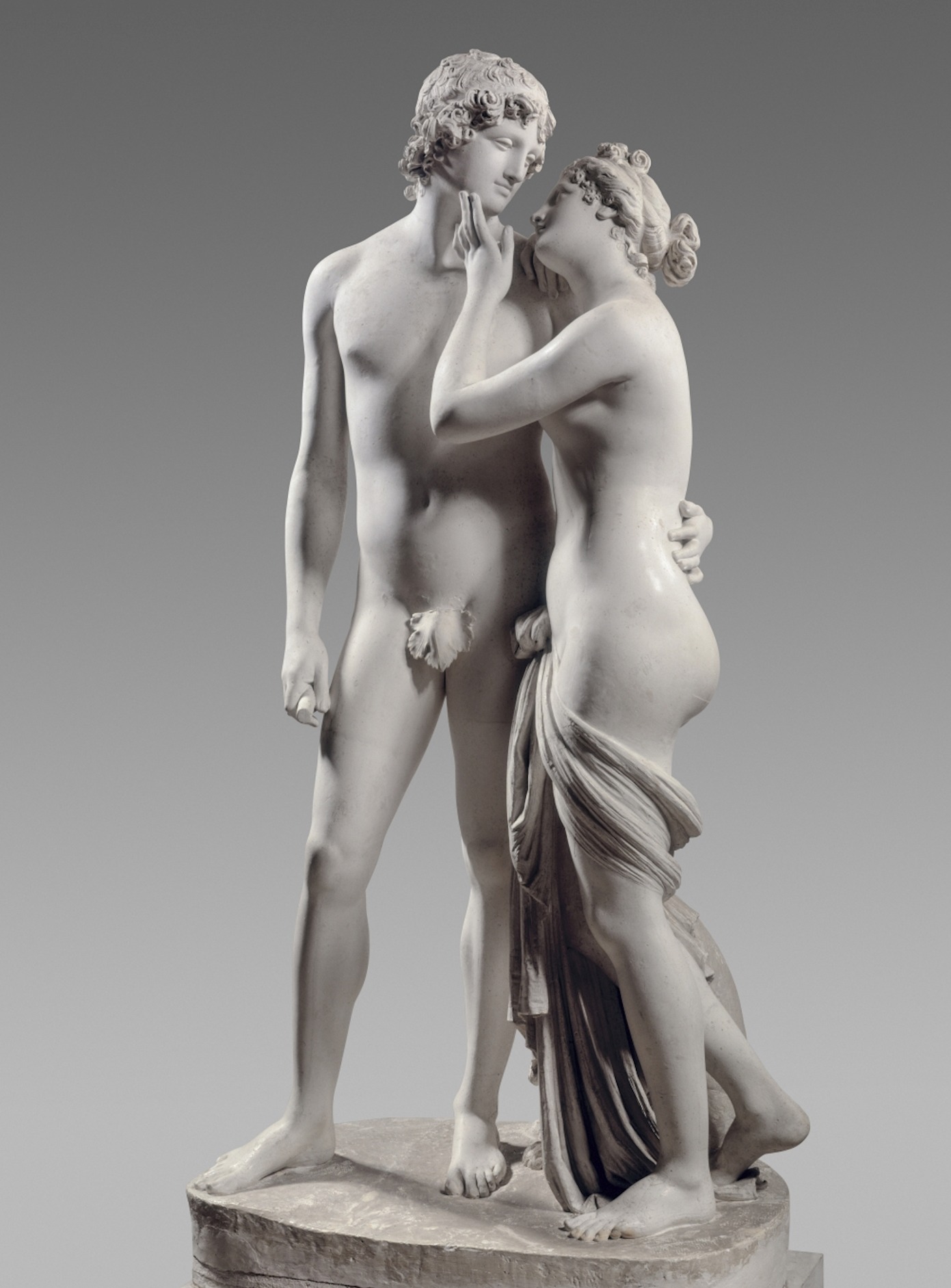
Antonio Canova, Venere e Adone. Museo Gypsotheca Antonio Canova
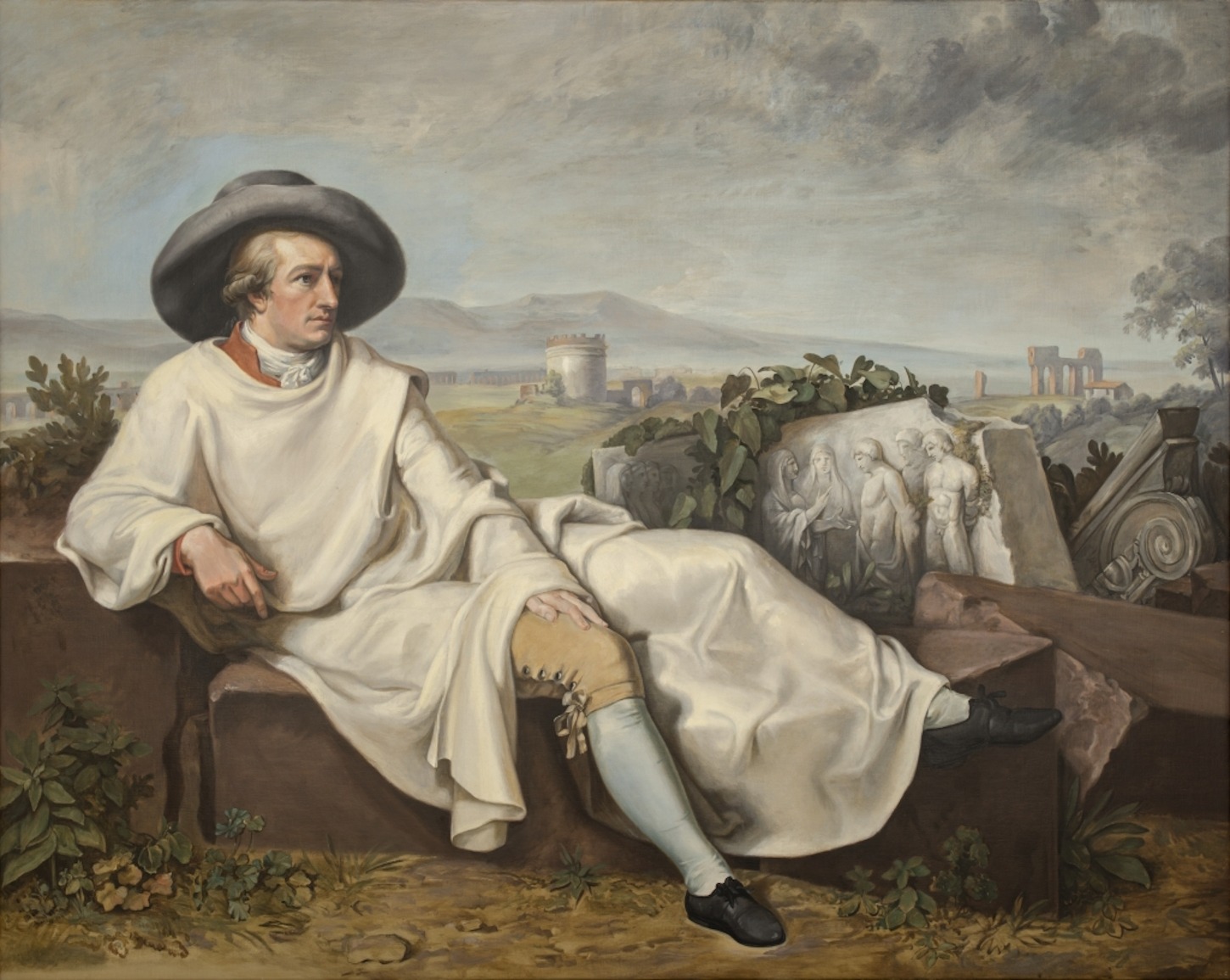
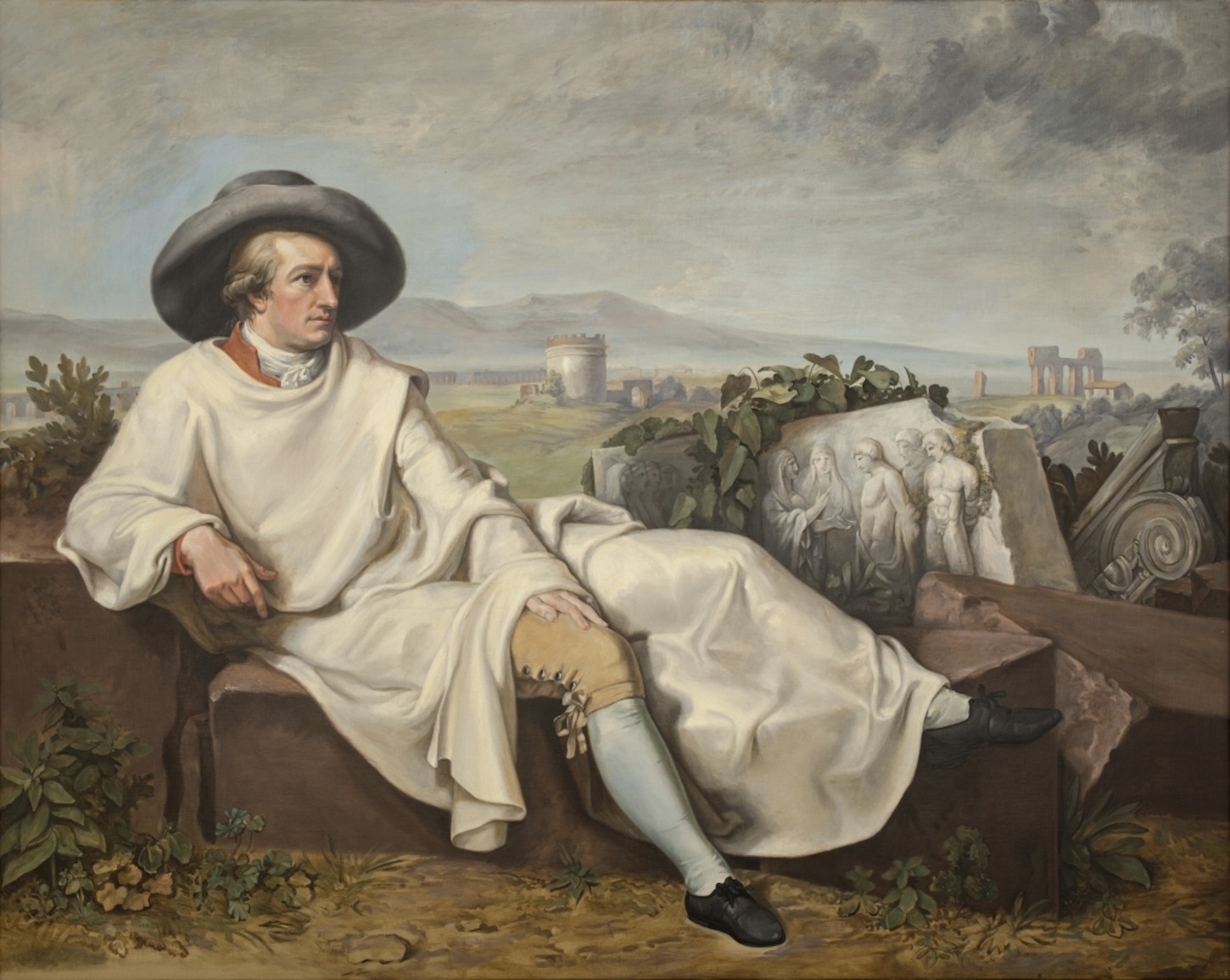
Georgi Takev, Goethe nella campagna romana. Casa di Goethe, Roma© Bibliotheca Hertziana-Max-Planck-Institut für Kunstgeschichte


After 1945: Rebuilding Through Art
In 1958, an exhibition at the Galleria Nazionale d’Arte Moderna in Rome — subsequently presented at the Städtische Museum Morsbroich in Leverkusen — entitled Contemporary German and Italian Painters reopened the dialogue between the two countries after the profound wounds of the war, within a broader climate of reconciliation. Among the artists represented were Alberto Burri, Piero Dorazio, Antonio Sanfilippo, Giuseppe Santomaso, Tancredi Parmeggiani and Toti Scialoja, alongside German artists including Karl Fred Dahmen, Fritz Winter, Hermann Bachmann, Peter Herkenrath, Bernard Schultze and Ernst W. Nay. The post-war period was a crucial moment in redefining cultural relations across Europe. German academies became international meeting places where different generations of artists came together. It was within this context that the ZERO group was founded in Düsseldorf in 1957 by Heinz Mack and Otto Piene, soon joined by Günther Uecker. The group maintained a close dialogue with Italy, where artists associated with the magazine Azimuth — including Enrico Castellani, Piero Manzoni, Agostino Bonalumi and Lucio Fontana — developed research that resonated strongly with the German movement.
Memory, Identity and the Contemporary
One of the most emblematic figures to emerge is Joseph Beuys, artist, theorist and teacher, who developed profound ties with Italy throughout his life. He transformed art into an instrument for political and social reflection, while also contributing to early ecological thinking. In this respect, his work found important parallels with Arte Povera, theorised by Germano Celant, and particularly with artists such as Mario Merz, Giuseppe Penone and Gilberto Zorio. Emilio Vedova, who also taught in Düsseldorf for a brief period and was one of Italy’s most powerful interpreters of the relationship between art and civic engagement, acts as a pivotal figure in this convergence of aesthetic visions and social commitment. His work enters into dialogue with German-speaking artists including the Viennese Actionists Arnulf Rainer and Günter Brus, as well as the younger Hermann Nitsch. From the late 1970s onwards, dialogue between Italy and Germany continued through artists of major international significance. Sigmar Polke, Gerhard Richter, Anselm Kiefer and Georg Baselitz addressed historical memory and Europe’s cultural responsibility in the aftermath of the tragedies of the twentieth century. During the 1980s, questions of memory and identity re-emerged forcefully in the work of the German neo-figurative painters known as the Neuen Wilden, including Markus Lüpertz, Helmut Middendorf and Rainer Fetting, and later in the younger generation of the New Leipzig School, represented by Neo Rauch. These experiences immediately entered into dialogue with developments in Italy, particularly the Transavanguardia, theorised by Achille Bonito Oliva, and artists such as Sandro Chia, Francesco Clemente, Enzo Cucchi, Mimmo Paladino and Nicola De Maria. The exhibition ideally concludes by looking towards the present, through a new generation of Italian and German artists who continue to exchange ideas and collaborate today, keeping the cultural dialogue between Rome and Berlin alive.
The cycle of three major exhibitions is curated by Gabriella Belli and Valerio Terraroli.
Promoted and organised by Comune di Vicenza, Centro Internazionale di Studi di Architettura Andrea Palladio, Fondazione Teatro Comunale Città di Vicenza and Marsilio Arte.
Main Partner: Intesa Sanpaolo
The exhibition Italy Germany is organised in collaboration with Mart – Museo di arte moderna e contemporanea di Trento e Rovereto, Museo Gypsotheca Antonio Canova in Possagno and Casa di Goethe in Rome. It is held under the patronage of the German Embassy as part of the celebrations marking the 75th anniversary of the resumption of diplomatic relations between Italy and Germany.

Not only masterpieces, but stories of encounters, journeys, influences and visions that have crossed borders. This is the idea behind Ispirazione Europa, an international project spanning five centuries of cultural and artistic history and placing at its heart the artists, ideas and relationships that have helped shape the European spirit.
The cycle opens on 13 November 2026 with Italy Germany, the first chapter of a journey that will continue with Italy France in 2027 and Italy Spain in 2028.
The exhibition explores two centuries of cultural relations between the two countries, with particular emphasis on the twentieth century, when dialogue between Italian and German artists, intellectuals, architects and designers became one of the driving forces of European modernity.
It reconstructs a dense network of journeys, encounters, influences and exchanges that transformed the language of art and, more broadly, Europe’s cultural outlook. Divided into chapters corresponding to the most significant moments in this process of cross-fertilisation, and set against the artistic, political and social histories of the two countries, the exhibition brings key episodes, figures and events back into focus.
Spanning the nineteenth and twentieth centuries, the exhibition highlights how exchanges between artists, intellectuals and writers generated new ideas and revolutions in artistic language. At the same time, these dialogues reflected the anxieties and hopes of an era marked by profound crises, often anticipating the collapses and subsequent rebirths that shaped European history over those two centuries.
The Exhibition
The cycle opens on 13 November 2026 with Italy Germany, the first chapter of a journey that will continue with Italy France in 2027 and Italy Spain in 2028. The exhibition explores two centuries of cultural relations between the two countries, with particular emphasis on the twentieth century, when dialogue between Italian and German artists, intellectuals, architects and designers became one of the driving forces of European modernity.
It reconstructs a dense network of journeys, encounters, influences and exchanges that transformed the language of art and, more broadly, Europe’s cultural outlook. Divided into chapters corresponding to the most significant moments in this process of cross-fertilisation, and set against the artistic, political and social histories of the two countries, the exhibition brings key episodes, figures and events back into focus.
Spanning the nineteenth and twentieth centuries, the exhibition highlights how exchanges between artists, intellectuals and writers generated new ideas and revolutions in artistic language. At the same time, these dialogues reflected the anxieties and hopes of an era marked by profound crises, often anticipating the collapses and subsequent rebirths that shaped European history over those two centuries.
Roots in the Eighteenth and Nineteenth Centuries: The Myth of Italy
The story begins in the late eighteenth century, when Italy became an essential destination for German artists and intellectuals. Johann Wolfgang von Goethe’s journey through Italy between 1786 and 1788 — later to become one of the foundational texts of European culture — helped establish within the German-speaking world the idea of Italy as a place of artistic and spiritual regeneration. It was in this climate that the Nazarenes formed their community in Rome. These German painters chose to live and work together in an attempt to restore a moral and religious dimension to painting, inspired by the purity of Italian Renaissance art. Among the leading figures was Friedrich Overbeck, emblematic of this experience and of one of the earliest moments of modern dialogue between the two cultures. Alongside this development came a confrontation between different interpretations of European Classicism, fuelled by the theories of Johann Joachim Winckelmann and embodied in the work of Antonio Canova, whose works in the exhibition are placed in dialogue with those of the younger Nordic sculptor Bertel Thorvaldsen. By the end of the nineteenth century, exchanges intensified through the Secession movements, particularly the Munich Secession, and through the visionary work of Giorgio de Chirico, placed in dialogue with Franz von Stuck, as well as with the Symbolist culture of Max Klinger and Arnold Böcklin, the latter of whom worked extensively in Italy.
The Avant-Gardes in Dialogue
At the beginning of the twentieth century, the relationship between Italy and Germany entered a decisive new phase. In 1912 and 1913, the Der Sturm gallery in Berlin hosted two historic exhibitions featuring the Italian Futurists. These marked one of the most intense encounters between the European avant-gardes: artists such as Umberto Boccioni, Carlo Carrà and Gino Severini came into contact with German Expressionists associated with Die Brücke and Der Blaue Reiter, including Franz Marc, August Macke, Carlo Mense, Heinrich Campendonk, Emil Nolde and Karl Schmidt-Rottluff. Despite their differences, this encounter helped expand the language of European painting and redefine the possibilities for representing modernity.
Between the Wars: Art and Society
During the 1920s, the relationship between Italy and Germany became increasingly complex, reflecting the political and social tensions of the period. Italian Magic Realism and the German Neue Sachlichkeit reveal striking affinities in their representation of reality: a form of painting suspended between precision and unease, capable of expressing the fragility of both individuals and society in the aftermath of war. Artists such as Felice Casorati, Antonio Donghi, Gino Severini and Cagnaccio di San Pietro enter into an ideal dialogue with German painters such as Otto Dix, George Grosz, Heinrich Maria Davringhausen, Christian Schad, Georg Schrimpf and Alexander Kanoldt, among the interpreters of the anxieties of Weimar Germany. At the same time, another decisive chapter emerged: abstraction. Research developed around the Bauhaus redefined the relationship between art, architecture, design and society. In Italy, particularly in Milan and around the Galleria Il Milione, these ideas found a new generation of artists ready to experiment with radically innovative languages. The work of Wassily Kandinsky, Josef Albers and Willi Baumeister exerted a strong influence on Italian artists including Mauro Reggiani, Mario Radice, Luigi Veronesi, Carlo Rho, Alberto Magnelli, Fausto Melotti and Lucio Fontana.
After 1945: Rebuilding Through Art
In 1958, an exhibition at the Galleria Nazionale d’Arte Moderna in Rome — subsequently presented at the Städtische Museum Morsbroich in Leverkusen — entitled Contemporary German and Italian Painters reopened the dialogue between the two countries after the profound wounds of the war, within a broader climate of reconciliation. Among the artists represented were Alberto Burri, Piero Dorazio, Antonio Sanfilippo, Giuseppe Santomaso, Tancredi Parmeggiani and Toti Scialoja, alongside German artists including Karl Fred Dahmen, Fritz Winter, Hermann Bachmann, Peter Herkenrath, Bernard Schultze and Ernst W. Nay. The post-war period was a crucial moment in redefining cultural relations across Europe. German academies became international meeting places where different generations of artists came together. It was within this context that the ZERO group was founded in Düsseldorf in 1957 by Heinz Mack and Otto Piene, soon joined by Günther Uecker. The group maintained a close dialogue with Italy, where artists associated with the magazine Azimuth — including Enrico Castellani, Piero Manzoni, Agostino Bonalumi and Lucio Fontana — developed research that resonated strongly with the German movement.
Memory, Identity and the Contemporary
One of the most emblematic figures to emerge is Joseph Beuys, artist, theorist and teacher, who developed profound ties with Italy throughout his life. He transformed art into an instrument for political and social reflection, while also contributing to early ecological thinking. In this respect, his work found important parallels with Arte Povera, theorised by Germano Celant, and particularly with artists such as Mario Merz, Giuseppe Penone and Gilberto Zorio. Emilio Vedova, who also taught in Düsseldorf for a brief period and was one of Italy’s most powerful interpreters of the relationship between art and civic engagement, acts as a pivotal figure in this convergence of aesthetic visions and social commitment. His work enters into dialogue with German-speaking artists including the Viennese Actionists Arnulf Rainer and Günter Brus, as well as the younger Hermann Nitsch. From the late 1970s onwards, dialogue between Italy and Germany continued through artists of major international significance. Sigmar Polke, Gerhard Richter, Anselm Kiefer and Georg Baselitz addressed historical memory and Europe’s cultural responsibility in the aftermath of the tragedies of the twentieth century. During the 1980s, questions of memory and identity re-emerged forcefully in the work of the German neo-figurative painters known as the Neuen Wilden, including Markus Lüpertz, Helmut Middendorf and Rainer Fetting, and later in the younger generation of the New Leipzig School, represented by Neo Rauch. These experiences immediately entered into dialogue with developments in Italy, particularly the Transavanguardia, theorised by Achille Bonito Oliva, and artists such as Sandro Chia, Francesco Clemente, Enzo Cucchi, Mimmo Paladino and Nicola De Maria. The exhibition ideally concludes by looking towards the present, through a new generation of Italian and German artists who continue to exchange ideas and collaborate today, keeping the cultural dialogue between Rome and Berlin alive.
The cycle of three major exhibitions is curated by Gabriella Belli and Valerio Terraroli.
Promoted and organised by Comune di Vicenza, Centro Internazionale di Studi di Architettura Andrea Palladio, Fondazione Teatro Comunale Città di Vicenza and Marsilio Arte.
Main Partner: Intesa Sanpaolo
The exhibition Italy Germany is organised in collaboration with Mart – Museo di arte moderna e contemporanea di Trento e Rovereto, Museo Gypsotheca Antonio Canova in Possagno and Casa di Goethe in Rome. It is held under the patronage of the German Embassy as part of the celebrations marking the 75th anniversary of the resumption of diplomatic relations between Italy and Germany.
Vasilij Vasil’evič Kandinskij, Rot in Spitzform, 1925. Mart, Museo di arte moderna e contemporanea di Trento e Rovereto
Giorgio de Chirico, Villa romana, 1922. Mart, Museo di arte moderna e contemporanea di Trento e Rovereto
Antonio Canova, Venere e Adone. Museo Gypsotheca Antonio Canova
Georgi Takev, Goethe nella campagna romana. Casa di Goethe, Roma© Bibliotheca Hertziana-Max-Planck-Institut für Kunstgeschichte
After 1945: Rebuilding Through Art
In 1958, an exhibition at the Galleria Nazionale d’Arte Moderna in Rome — subsequently presented at the Städtische Museum Morsbroich in Leverkusen — entitled Contemporary German and Italian Painters reopened the dialogue between the two countries after the profound wounds of the war, within a broader climate of reconciliation. Among the artists represented were Alberto Burri, Piero Dorazio, Antonio Sanfilippo, Giuseppe Santomaso, Tancredi Parmeggiani and Toti Scialoja, alongside German artists including Karl Fred Dahmen, Fritz Winter, Hermann Bachmann, Peter Herkenrath, Bernard Schultze and Ernst W. Nay. The post-war period was a crucial moment in redefining cultural relations across Europe. German academies became international meeting places where different generations of artists came together. It was within this context that the ZERO group was founded in Düsseldorf in 1957 by Heinz Mack and Otto Piene, soon joined by Günther Uecker. The group maintained a close dialogue with Italy, where artists associated with the magazine Azimuth — including Enrico Castellani, Piero Manzoni, Agostino Bonalumi and Lucio Fontana — developed research that resonated strongly with the German movement.
Memory, Identity and the Contemporary
One of the most emblematic figures to emerge is Joseph Beuys, artist, theorist and teacher, who developed profound ties with Italy throughout his life. He transformed art into an instrument for political and social reflection, while also contributing to early ecological thinking. In this respect, his work found important parallels with Arte Povera, theorised by Germano Celant, and particularly with artists such as Mario Merz, Giuseppe Penone and Gilberto Zorio. Emilio Vedova, who also taught in Düsseldorf for a brief period and was one of Italy’s most powerful interpreters of the relationship between art and civic engagement, acts as a pivotal figure in this convergence of aesthetic visions and social commitment. His work enters into dialogue with German-speaking artists including the Viennese Actionists Arnulf Rainer and Günter Brus, as well as the younger Hermann Nitsch. From the late 1970s onwards, dialogue between Italy and Germany continued through artists of major international significance. Sigmar Polke, Gerhard Richter, Anselm Kiefer and Georg Baselitz addressed historical memory and Europe’s cultural responsibility in the aftermath of the tragedies of the twentieth century. During the 1980s, questions of memory and identity re-emerged forcefully in the work of the German neo-figurative painters known as the Neuen Wilden, including Markus Lüpertz, Helmut Middendorf and Rainer Fetting, and later in the younger generation of the New Leipzig School, represented by Neo Rauch. These experiences immediately entered into dialogue with developments in Italy, particularly the Transavanguardia, theorised by Achille Bonito Oliva, and artists such as Sandro Chia, Francesco Clemente, Enzo Cucchi, Mimmo Paladino and Nicola De Maria. The exhibition ideally concludes by looking towards the present, through a new generation of Italian and German artists who continue to exchange ideas and collaborate today, keeping the cultural dialogue between Rome and Berlin alive.
The cycle of three major exhibitions is curated by Gabriella Belli and Valerio Terraroli.
Promoted and organised by Comune di Vicenza, Centro Internazionale di Studi di Architettura Andrea Palladio, Fondazione Teatro Comunale Città di Vicenza and Marsilio Arte.
Main Partner: Intesa Sanpaolo
The exhibition Italy Germany is organised in collaboration with Mart – Museo di arte moderna e contemporanea di Trento e Rovereto, Museo Gypsotheca Antonio Canova in Possagno and Casa di Goethe in Rome. It is held under the patronage of the German Embassy as part of the celebrations marking the 75th anniversary of the resumption of diplomatic relations between Italy and Germany.
Plan your visit
Opening hours
Open daily from 10:00 AM to 6:00 PM; closed on Mondays.
Special opening hours
Thursday, 24 December: 10:00 AM–6:00 PM
Friday, 25 December: 2:00 PM–6:00 PM
Saturday, 26 December: 10:00 AM–6:00 PM
Monday, 28 December: 10:00 AM–6:00 PM
Thursday, 31 December: 10:00 AM–6:00 PM
Friday, 1 January 2027: 2:00 PM–6:00 PM
Monday, 5 January: 10:00 AM–6:00 PM
Monday, 29 March: 10:00 AM–6:00 PM
Monday, 26 April: 10:00 AM–6:00 PM
Booking and ticketing call centre:
+39 0444 964380
Monday to Friday
9:00 AM–1:00 PM / 2:00 PM–6:00 PM
infomostreinbasilica@comune.vicenza.it
Advance booking is required for groups and school groups.
Ticket prices
Individual visitors
Open ticket: €17.00 (available online only and valid from the day after purchase)
Full price: €15.00
Early Bird full-price ticket for purchases and bookings made by 31 August 2026: €13.00
Reduced: €13.00 – Visitors aged 6 to 25, university students with a valid student ID, military personnel, off-duty law enforcement officers, holders of a valid Gold, Silver or Vicenza Platinum Card, and employees of the Municipality of Vicenza
Family reduced ticket: €12.00 per adult (1 or 2 adults accompanied by one or more children aged 6 to 14); €5.00 per child
Free admission: children under 6; accredited journalists (upon presentation of a valid professional press card); licensed tour guides with valid identification; visitors with disabilities and one companion where required; one accompanying person per group; two accompanying persons per school group; holders of a valid ICOM – International Council of Museums card.
Groups
Adults: €13.00 per person (valid for groups of at least 10 people; one accompanying person per group is admitted free of charge)
Schools: €5.00 per student (two accompanying persons per class are admitted free of charge)
Guided tours and workshops
Guided tour for adults – Italian: €100.00
Guided tour for adults – English: €120.00
Guided tour for schools – Italian: €80.00
Guided tour for schools – English: €90.00
Guided tour + 2-hour workshop: €120.00
Scheduled guided tours: €6.00
Advance booking fees for online purchases and bookings made through the call centre:
€2.00 for individual visitors and groups
€1.00 for schools
Reduced and free admission rates are available only upon presentation of a valid, non-expired document, card or badge confirming eligibility.
Educational
Press
Ufficio stampaCittà di Vicenza
0444221226
uffstampa@comune.vicenza.it
www.comune.vicenza.it
Ufficio stampa mostra Marsilio Arte
Giovanna Ambrosano
Cell. 338 4546387
g.ambrosano@marsilioarte.it
ufficio.stampa@marsilioarte.it
www.marsilioarte.it
Cartella stampa >
Related products