Now available in bookstores is the volume ‒ co-promoted by the Directorate General for Contemporary Creativity of the Ministry of Culture and La Quadriennale Foundation in Rome and published by Marsilio Arte ‒ resulting from research conducted last year by Christian Caliandro, involving 42 experts in the field. How is the image of contemporary Italian art projected abroad, and how does the outside world in turn receive and perceive this image? “Us in the world” attempts to investigate these dimensions
42 interviews with experts in the field (artists, curators, art critics and historians, museum directors, fair directors, gallery owners, art advisors), 2 sections, 12 chapters.
This book is therefore also a choral narrative, focusing on what we will conveniently call the “foreign perception of Italian contemporary art”, the challenges it poses, and the potential it reveals. It aims to record the meaning of a work that obviously does not claim to be exhaustive but which, due to the very nature and structure of the phenomenon under investigation, is necessarily a work in progress.
This report, co-promoted by the Directorate General for Contemporary Creativity of the Ministry of Culture and La Quadriennale Foundation in Rome, was conceived with the idea of involving forty-two experts in the field, interviewing them and asking them a few simple questions, the same for everyone (and which naturally opened up a dialogue that was different each time, consisting of insights, connections, and digressions): How do you feel about the current perception of Italian contemporary art abroad, from your professional point of view and based on your experience? How do you think this perception has changed over the last twenty to twenty-five years? What tools and strategies, to be implemented or introduced from scratch, do you think are useful to make this perception more effective?
The “survey” produced a rich and multifaceted picture (at times even contradictory, as it should be) with certain topics and themes emerging with particular force and consistency; multiple views and varied interpretations of the critical issues and opportunities presented by the role and positioning of Italian art in the global and international context. This sort of collective portrait, a blurred and out-of-focus snapshot of the Italian art system today ‒ and the image it projects to the outside world ‒ is complemented by excerpts from the interviews (which can be heard and seen in full on the Quadriennale website) with data that corroborate impressions and nuances, and with my personal, inevitably partial, interpretation.
The first part of the text analyzes the image of Italian contemporary art abroad through the themes of globalization and post-globalization, the “individualization” of the artist (compared to the era of groups) and xenophilia, the market, participation in major events and international media perception, the relationship with the ‘others’ who compose the Italian imagination, institutional strategies and policies, mobility and social media. The second part, with a more historical-critical approach, addresses the specificity of contemporary Italian art through the relationship between Arte Povera and Transavanguardia, and their influence on subsequent decades, the case study of Cattelan, the negotiations between different generations, and finally the relationship with heritage and tradition. As one of the artists interviewed, Francesco Jodice, states: “In some ways, there is a sort of generational diffraction between what history is and contemporary art’s ability to relate to it. This is to say that when we talk about Italian artists and how they are perceived abroad, I would always tend to turn the table and reverse the question: what is the ability of Italian artists to understand what is happening in the world right now? What are the great secret mechanisms that somehow shift the narrative? What is our history made of? From this point of view, I could say that the question that interests me most of all, as an artist but also as a teacher of contemporary art, is: what is the ability of Italian artists to produce dreams? And what is the dimension of these dreams, their latitude, their extension?”
This research is, of course, only a starting point. In addition to perception (by the market, institutions, curators, critics, foreign journalists, etc.), we should take a close look at the type of image we project so that it is (or is not) perceived; and we should strive to truly understand, in a very thorough and accurate manner, the object we want to be perceived externally, the object behind that image: Italian contemporary art, especially that conceived and created by the latest generations. This means constructing a narrative, or perhaps a narrative made up of several narratives, that is coherent, intelligent and ‒ if possible ‒ compelling, exciting, engaging, and critical of what is happening in our art scene.
Christian Caliandro
BIO
Christian Caliandro (1979) is a contemporary art historian and critic. He teaches History of Contemporary Painting, History and Methodology of Art Criticism, and Art Economics and Market at the Academy of Fine Arts in Florence. Among is books: La trasformazione delle immagini. L’inizio del postmoderno tra arte, cinema e teoria, 1977-1983 (Mondadori Electa 2008), Italia Reloaded. Ripartire con la cultura (il Mulino 2011, with Pier Luigi Sacco), Italia Revolution. Rinascere con la cultura (Bompiani 2013), Italia Evolution. Crescere con la cultura (Meltemi 2018), Tracce di identità dell’arte italiana. Opere dal patrimonio del Gruppo Unipol (Silvana Editoriale 2018), il manuale Storie dell’arte contemporanea (Mondadori Università 2021), L’arte rotta (Castelvecchi 2022) and Contro l’arte fighetta (2023). From 2004 to 2011, he ran the columns inteoria and essai on Exibart; since 2011, he runs the column inpratica on Artribune.
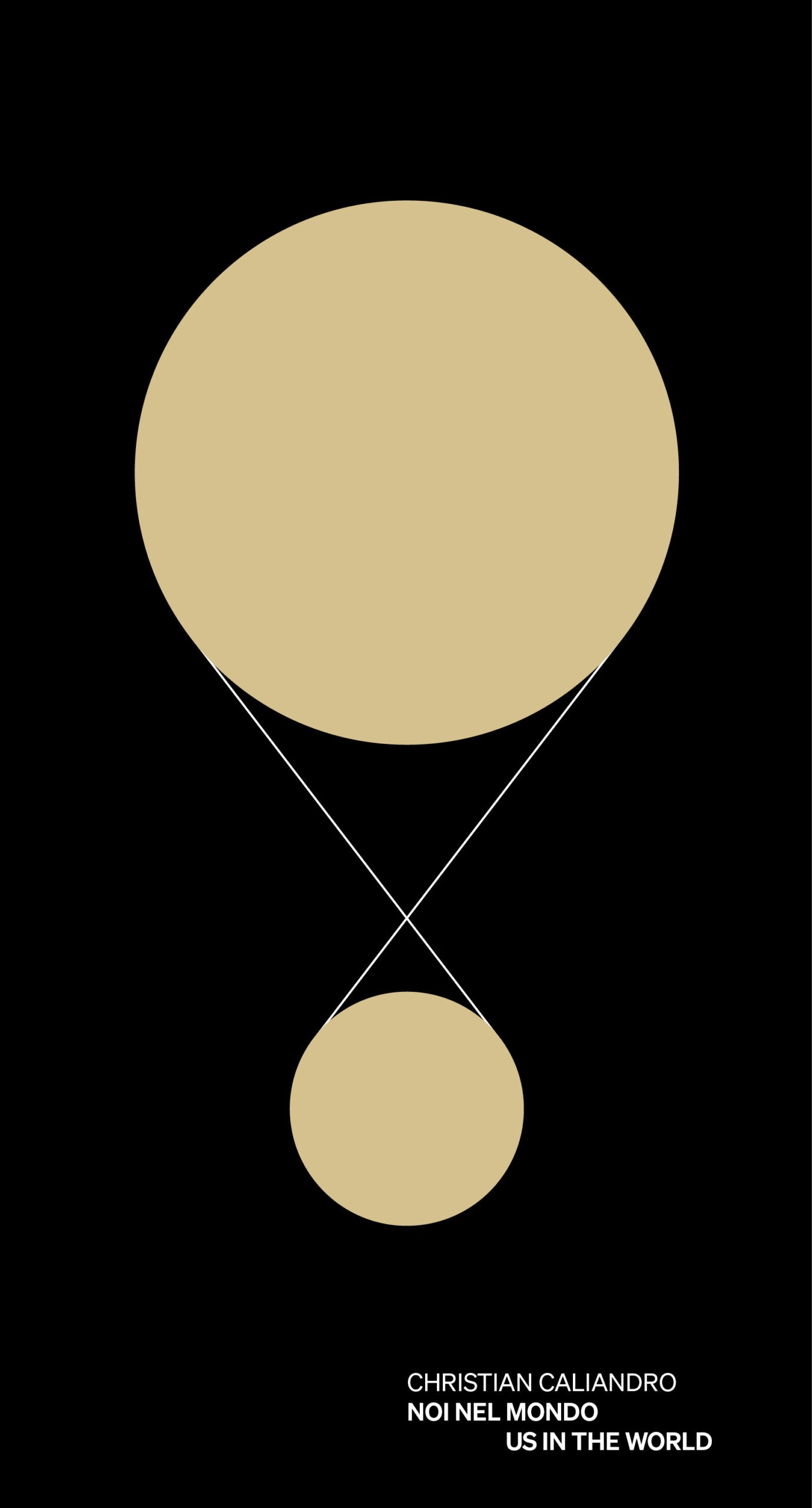
The cover of the book by Christian Caliandro, Us in the world. An investigation into the foreign perception of contemporary Italian art, Marsilio Arte, Venice 2026 (cover photo)
Related products
Related Articles